

AI assistant in Telegram
Lykhtaryk
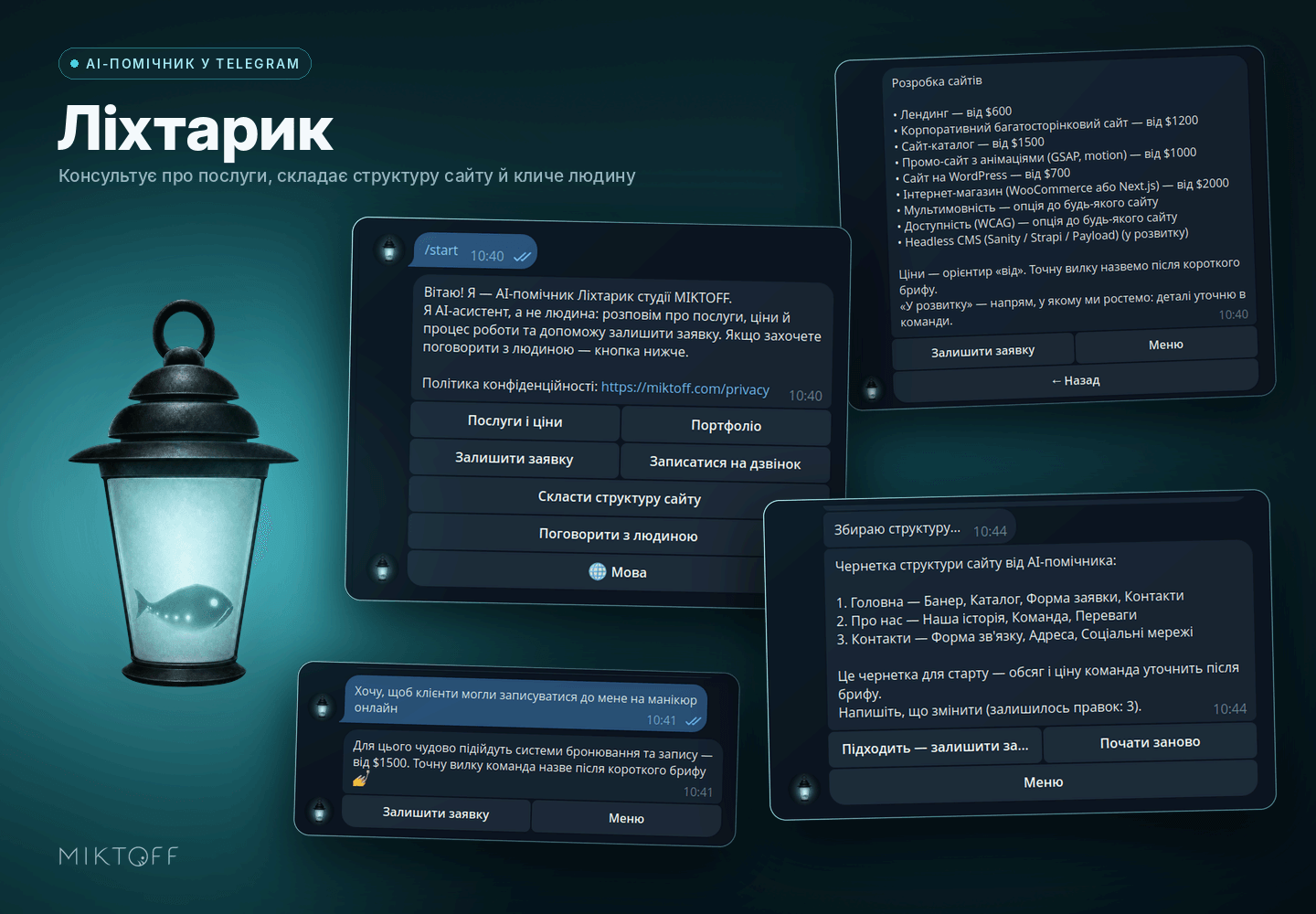
Lykhtaryk is the studio's AI assistant in Telegram: it answers questions about services and prices from a knowledge base, drafts a site structure from a short brief, collects the request and hands the conversation over to a person.
- Category
- AI assistant in Telegram
- Year
- 2026
- Stack
- Node.js, TypeScript, grammY, Gemini API, PostgreSQL, Prisma
The task
Build the studio's first line of sales in Telegram: answer questions about services, prices and the process, help people figure out which service they need and pass the request to the team — without ever making up prices, timelines or services that do not exist.
What we did
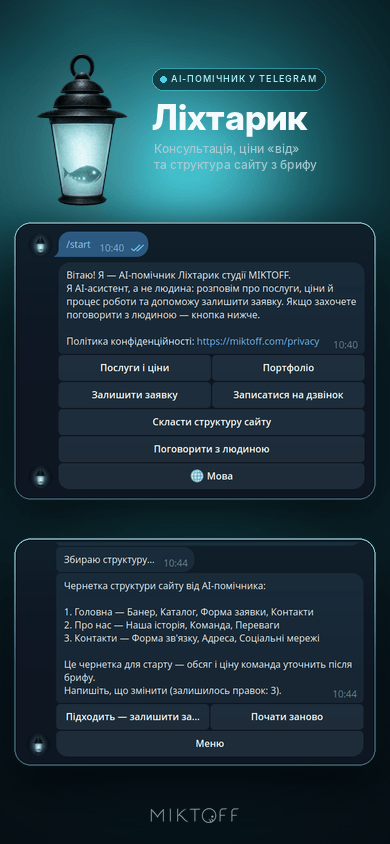
From the very first message the bot says it is an AI assistant, not a person, and shows a menu: services and prices, portfolio, request, call, site structure and Talk to a person. The catalog covers eight areas as buttons, from design and websites to Telegram bots and support, with "from" prices right in the chat; the buttons keep working even when the AI is unavailable. Free-form text is answered by the model: a client describes the task in their own words — say, "I want online booking for my nail studio" — and the bot picks the matching service with a price guide and offers to leave a request. Answers come only from the studio's knowledge base, and a separate filter checks every reply before it is sent: an amount that is not in the base, a foreign currency or a piece of the instructions, and the client sees a safe text instead. The Build a site structure brief is six short button questions (niche, goal, what the site should do, what you already have), after which the AI drafts a page list; it can be revised three times and sent straight away as a request. When a client asks for a person, the team gets a short summary of the conversation in its chat — what is needed, which prices the bot has already quoted, the client's language — and simply replies to it, while a Finish button hands the conversation back to the AI.
Result
A first line of sales in Telegram that does not make things up: prices only as "from" and only from the knowledge base, and anything the bot does not know goes to a person together with the context of the conversation. Three languages chosen from the Telegram language (Ukrainian, English, Russian) and daily limits on AI calls, overall and per client. 63 test scenarios run against the live model, 12 of them attempts to make the bot forget its instructions or quote a made-up price.
Mobile version